How to Handle Late Payments: A Small Business Guide to Getting Paid on Time
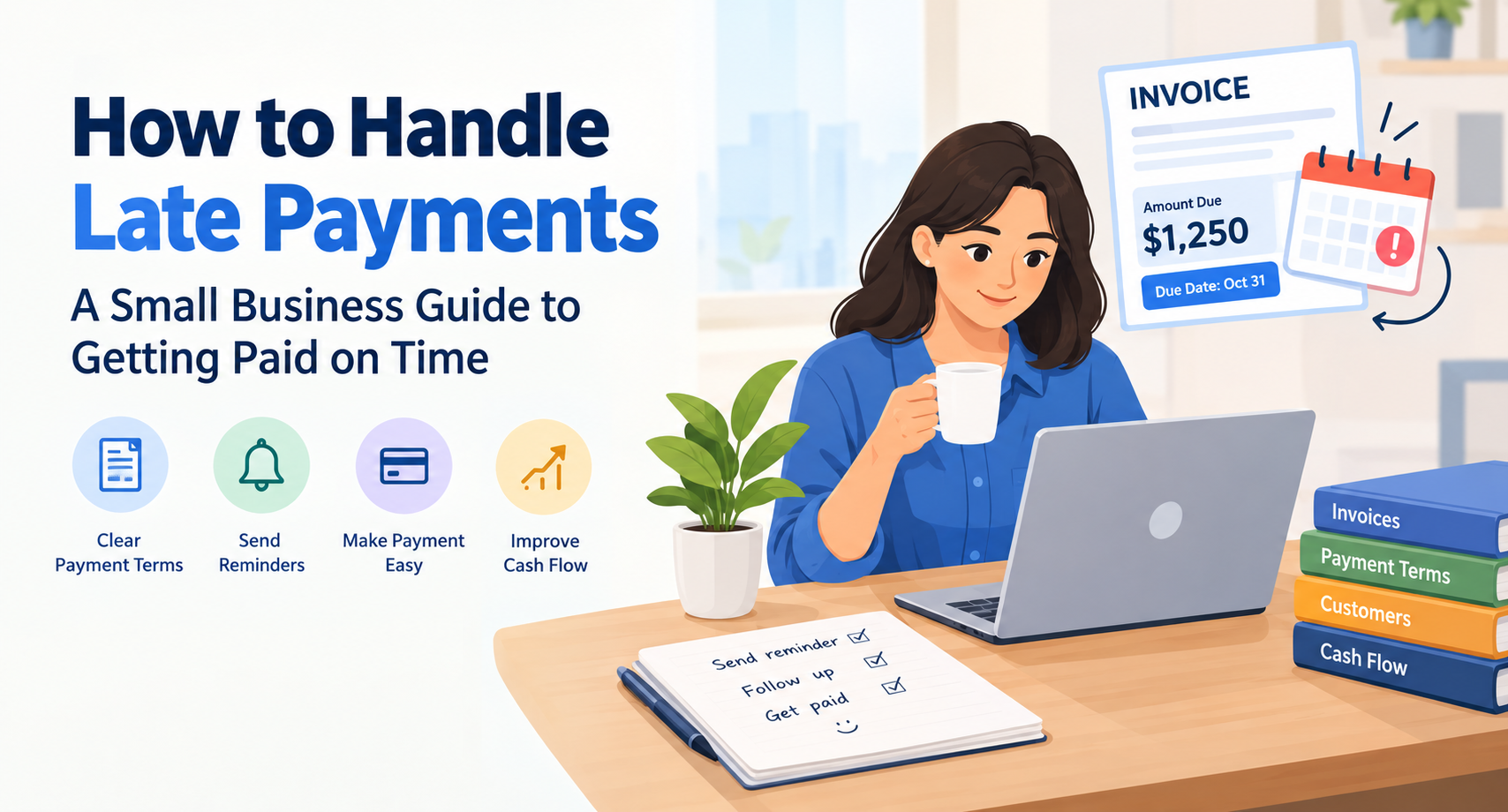
Late payments can create a cash-flow problem even when your business is doing everything else right.
You complete the work, send the invoice, and wait for the payment. The due date passes, but the money does not arrive. Now you have to decide whether to send a reminder, call the customer, wait a few more days, or take a stronger approach.
For a small business, the best solution is usually not to chase customers aggressively. It is to create a clear invoicing and payment process that makes expectations easy to understand from the beginning.
In this guide, you'll learn how to handle late payments, why customers sometimes pay late, how to prevent overdue invoices, when to send payment reminders, and what to do when an invoice remains unpaid.
What Is a Late Payment?
A late payment occurs when a customer does not pay an invoice by the agreed payment due date.
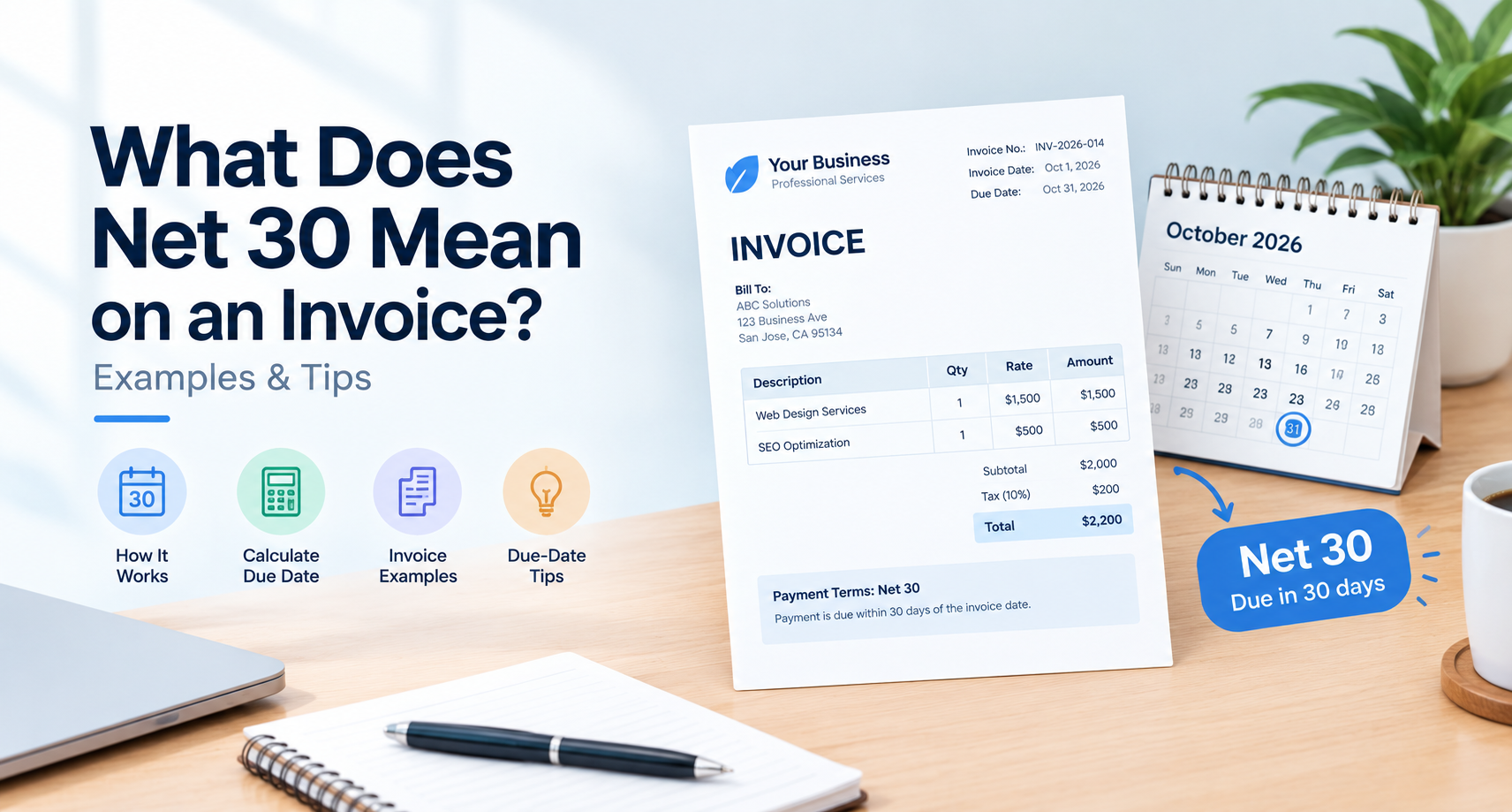
For example, if you send an invoice with Net 30 payment terms, the customer generally has 30 days to pay. If the payment has not been received after the agreed deadline, the invoice becomes overdue.
An invoice normally tells the customer:
- What they are being charged for
- How much they owe
- When payment is due
- How they can pay
If you're new to invoicing, our guide on what an invoice is, including types, examples, and how invoicing works explains the basic invoicing process in more detail.
The important distinction is simple:
Outstanding invoice = payment has not been received yet.
Overdue invoice = the agreed payment deadline has passed and payment has not been received.
Why Do Customers Pay Late?
Not every late payment means a customer is deliberately avoiding payment.
Payment delays can happen for several reasons.
1. The customer forgot
The invoice may have been overlooked in a busy inbox.
2. The invoice went to the wrong person
Some companies require invoices to be sent to a specific accounts-payable or billing department.
3. The invoice has missing information
A missing purchase order number, incorrect billing information, or unclear service description can delay approval.
4. The payment terms were unclear
If the customer does not understand when payment is due, the invoice may not be processed on time.
5. The customer has an internal approval process
Larger businesses may need invoices approved by several people before payment is released.
6. The customer has a cash-flow problem
A customer may be experiencing their own financial or operational delays.
This is why the first payment reminder should usually be professional and factual. Give the customer an opportunity to explain or resolve the issue before assuming the worst.
How Can a Small Business Prevent Late Payments?
The best way to deal with late payments is to reduce the chances of them happening in the first place.
A consistent invoicing process can make payment expectations much clearer.
1. Set Clear Payment Terms
Your payment terms tell the customer when you expect to receive payment.
Common payment terms include:
- Due on Receipt
- Net 7
- Net 15
- Net 30
- Net 45
- Net 60
- Deposit before work begins
- Milestone payments
For example:
Payment Terms: Net 30. Payment is due within 30 days of the invoice date.
Even better, include the actual date:
Payment Terms: Net 30. Payment due October 31, 2026.
Our detailed guide to invoice payment terms, including Net 15, Net 30, and Due on Receipt covers different payment terms and examples.
Clear payment terms do not guarantee that every customer will pay on time, but they remove uncertainty about when payment is expected.
2. Put the Due Date Clearly on the Invoice
Do not make customers calculate the due date themselves.
Instead of showing only:
Terms: Net 30
show:
Invoice Date: October 1, 2026
Due Date: October 31, 2026
Payment Terms: Net 30
A clearly displayed due date gives both you and the customer a specific reference point.
Your invoice should also contain the other information necessary to understand and process the payment.
See our guide on what an invoice should include: 10 essential elements for a complete checklist.
3. Send Invoices Promptly
Do not wait unnecessarily to invoice a customer.
If your agreement allows you to invoice immediately after completing a project or milestone, send the invoice promptly.
A simple process is:
Complete work → Create invoice → Send invoice → Track due date → Receive payment
The longer you wait to send the invoice, the longer the payment process can take.
If you need help creating an invoice, follow our complete guide to creating an invoice for a small business.
4. Make Your Invoice Easy to Understand
A customer should be able to open the invoice and quickly answer three questions:
What am I paying for?
How much do I owe?
When do I need to pay?
A professional invoice should normally include:
- Business information
- Customer information
- Invoice number
- Invoice date
- Due date
- Product or service description
- Quantity and price
- Taxes or discounts where applicable
- Total amount due
- Payment terms
- Payment instructions
Avoid vague descriptions such as:
Marketing services — $1,500
Instead, provide enough information for the customer to understand what the charge covers.
5. Make Payment Easy
Sometimes a customer is ready to pay but cannot easily determine how.
Your invoice should clearly explain the accepted payment method.
Depending on your business, this might include:
- Bank transfer
- Credit or debit card
- Online payment
- Check
- Other agreed payment methods
The payment instructions should be easy to find.
A customer should not need to send you another email simply to ask where to make the payment.
6. Send a Reminder Before the Due Date
You do not have to wait until an invoice is overdue before contacting the customer.
A short reminder several days before the due date can help prevent accidental late payments.
For example:
Subject: Reminder: Invoice #1025 Due October 15
Hi [Client Name],
Just a quick reminder that Invoice #1025 for [Amount] is due on October 15.
Please let me know if you have any questions or need anything from me.
Thank you,
[Your Name]
The message does not need to sound like a collection notice. It is simply a reminder.
What Should You Do When a Payment Is Late?
When an invoice becomes overdue, follow a consistent process instead of reacting differently every time.
Step 1: Check the Invoice
Before contacting the customer, confirm:
- Invoice number
- Customer name
- Invoice amount
- Invoice date
- Due date
- Payment terms
- Payment instructions
- Payment status
Also check your bank account or payment records to make sure the payment has not already arrived.
Step 2: Confirm the Customer Received the Invoice
The invoice may have gone to the wrong email address or been missed.
If necessary, resend the invoice.
A simple message can say:
Hi [Client Name],
I’m following up on Invoice #1025, which was due on October 15. I’ve attached another copy for convenience. Please let me know if you need anything from me to process the payment.
Step 3: Ask When Payment Will Be Made
If the invoice remains unpaid, ask for a specific payment date.
For example:
Could you please confirm when we can expect payment for Invoice #1025?
This is more useful than simply saying:
Please pay as soon as possible.
A specific question gives the customer something clear to respond to.
Step 4: Ask Whether Something Is Holding Up Payment
Sometimes the problem is administrative rather than intentional.
Ask:
Is there anything you need from us to help get this invoice processed?
The customer may tell you that:
- A purchase order number is missing
- The invoice needs to go to another department
- The billing information needs correction
- The invoice is awaiting approval
- Another document is required
If the problem can be fixed, resolving it may be enough to move the payment forward.
Step 5: Become More Direct if Necessary
If several reminders receive no response, you can make your communication more direct while remaining professional.
State:
- Invoice number
- Outstanding amount
- Original due date
- Current payment status
- Requested payment date
Do not turn the message into a personal argument.
Focus on the invoice and the action required.
For a detailed reminder sequence and email templates, see How to Follow Up on an Unpaid Invoice Without Losing the Customer.
How Often Should You Follow Up on a Late Payment?
There is no universal reminder schedule that applies to every business.
Your agreed payment terms, customer relationship, industry, and business process should determine your approach.
A simple workflow could be:
| Timing | Suggested action |
|---|---|
| Before due date | Friendly reminder |
| Due date | Payment-due reminder if appropriate |
| A few days overdue | Polite payment follow-up |
| 1–2 weeks overdue | More direct request for payment date |
| Seriously overdue | Formal or firmer follow-up according to your agreement |
The important thing is consistency.
You do not want to ignore an invoice for several weeks and then suddenly send an angry message.
Should You Charge a Late Payment Fee?
A late payment fee can be part of a business's payment policy, but it should not be added unexpectedly after a customer misses the deadline.
If you intend to charge a late fee, make the terms clear before the payment becomes overdue and make sure they comply with the applicable agreement and laws.
Your payment policy should explain:
- When the fee applies
- How it is calculated
- When it begins
- Whether there are limits
- Any other applicable conditions
Late-payment rules can vary by location, contract, industry, and transaction type.
For that reason, businesses should check the rules that apply to their particular situation before charging or enforcing a late fee.
How Can You Get Customers to Pay on Time?
There is no single method that guarantees on-time payment.
However, a consistent process can reduce avoidable delays.
Focus on these basics:
Set expectations early
Agree on payment terms before the work begins.
Invoice quickly
Send the invoice according to the agreed billing schedule.
Make the due date obvious
Show the actual payment deadline.
Make payment easy
Provide clear payment instructions.
Remind customers
Send a friendly reminder before or around the due date.
Track outstanding invoices
Know which invoices are unpaid and how long they have been outstanding.
Follow up consistently
Use a repeatable reminder process instead of handling every customer differently.
How Invoice Numbers Help With Payment Tracking
A unique invoice number makes it easier to identify a specific payment request.
For example:
INV-2026-001
INV-2026-002
INV-2026-003
When you contact a customer about an overdue invoice, referencing the invoice number makes the conversation much clearer.
The customer can search for the invoice, while you can match the payment to the correct transaction.
For a deeper look at this process, read our guide on how to number invoices and use a simple invoice numbering system.
Should You Send a Late Payment Reminder by Email?
Yes. Email is a practical way to send and document payment reminders.
A useful reminder should include:
- Customer name
- Invoice number
- Amount due
- Original due date
- Current payment status
- Requested next step
If you need to send the original invoice or a copy again, attaching the PDF can save the customer time.
For the initial invoice itself, our guide on how to send an invoice by email with a professional email template covers the process, subject lines, email templates, and attachment checklist.
What Is the Difference Between an Unpaid Invoice and a Receipt?
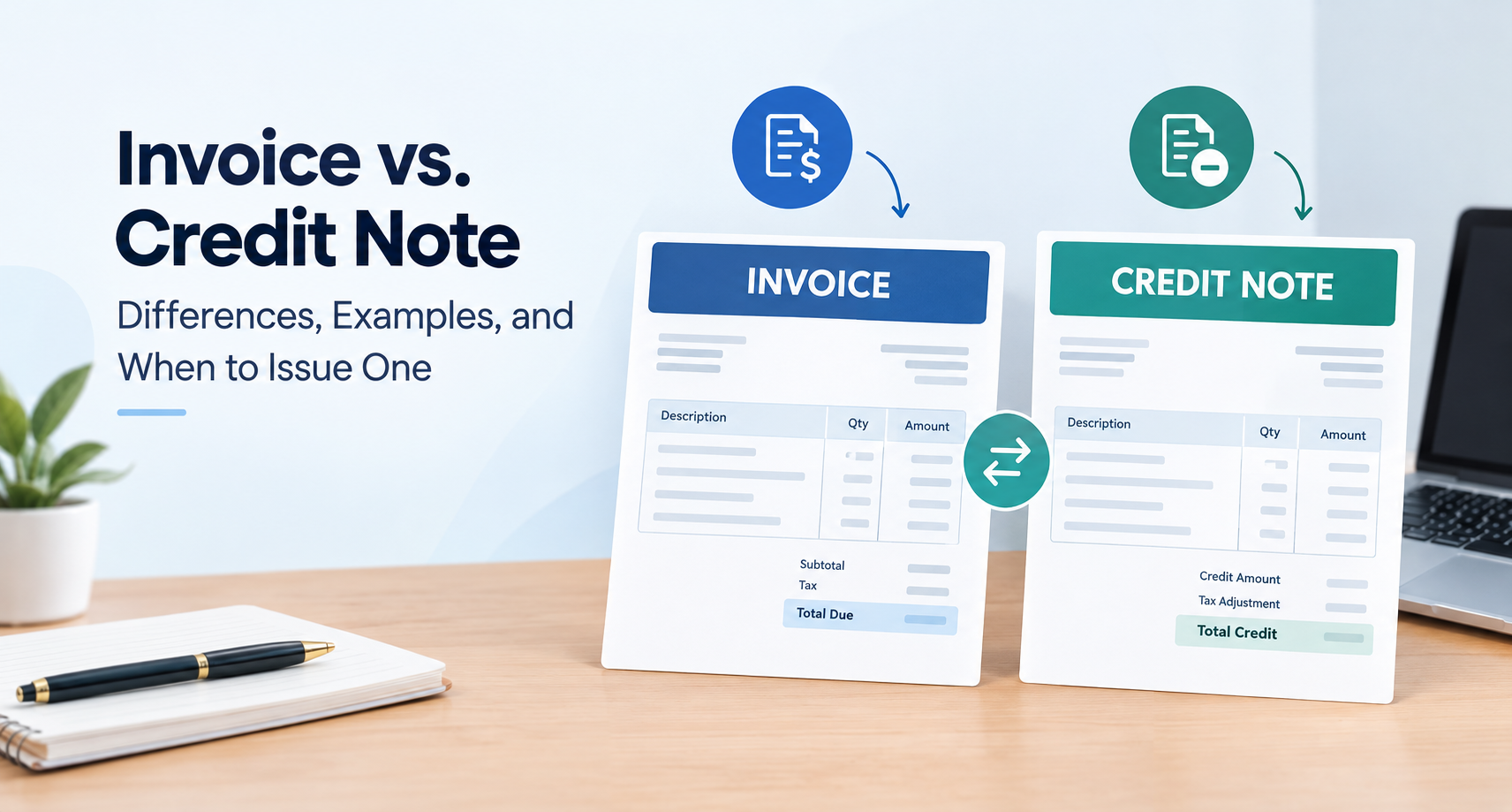
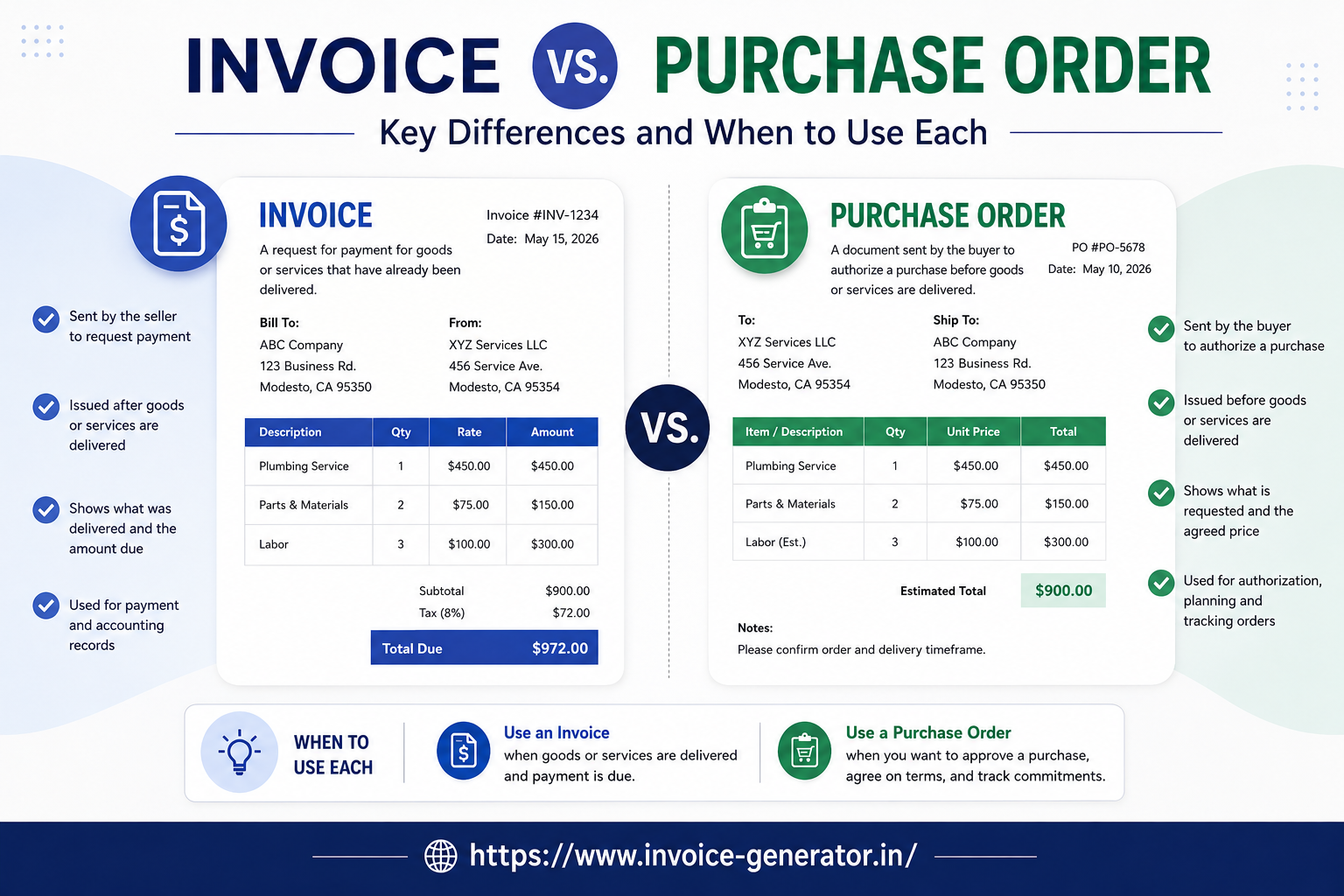
An invoice requests payment.
A receipt confirms payment.
If a customer has not paid yet, the invoice remains the relevant document for the amount owed.
Once the payment is received, the business records the payment and may issue a receipt or other payment confirmation depending on its process.
For a more detailed explanation, read Invoice vs. Receipt: What's the Difference?.
Keeping the payment status clear helps prevent confusion between what the customer owes and what they have already paid.
A Simple Late Payment Process for Small Businesses
You do not need a complicated collection system to manage ordinary late payments.
A simple workflow can look like this:
1. Create an accurate invoice
↓
2. Set clear payment terms
↓
3. Send the invoice promptly
↓
4. Track the due date
↓
5. Send a reminder before or around the due date
↓
6. Follow up when the invoice becomes overdue
↓
7. Ask whether anything is blocking payment
↓
8. Request a specific payment date
↓
9. Escalate according to your agreement if necessary
This process gives you a consistent way to handle late payments without making every overdue invoice a stressful situation.
Frequently Asked Questions About Late Payments
What is a late payment?
A late payment occurs when a customer does not pay an invoice by the agreed payment due date.
How do I politely ask a customer to pay a late invoice?
Keep the message short and factual. Mention the invoice number, amount due, original due date, and ask when payment can be expected.
When should I send a late payment reminder?
You can send a friendly reminder before the due date and follow up after the invoice becomes overdue. The exact timing should reflect your agreed payment terms and normal business process.
How do I get customers to pay invoices on time?
Use clear payment terms, send accurate invoices promptly, show the due date clearly, provide easy payment instructions, and follow up consistently.
What should I include in a late payment email?
Include the invoice number, amount due, original due date, current status, and a clear request for payment or an expected payment date.
Should I attach the invoice again when following up?
Yes, attaching the invoice again can make the payment process easier for the customer because they do not have to search through previous emails.
Can I charge a late payment fee?
A late fee may be appropriate if it was included in the agreement and is permitted by applicable rules. Make the terms clear before applying the fee.
Is a late invoice the same as an unpaid invoice?
Not necessarily. An invoice can be unpaid but not yet overdue. A late or overdue invoice is one where the agreed payment deadline has passed without payment.
How can small businesses track late payments?
Use unique invoice numbers, record invoice dates and due dates, monitor payment status, and keep a record of follow-up messages and customer responses.
What should I do if a customer refuses to pay?
First, review the agreement, invoice, payment history, and reason for the dispute. Try to resolve legitimate billing issues directly. If the amount is significant or the dispute cannot be resolved, consider obtaining appropriate professional or legal advice for your situation.
Final Thoughts
Late payments are easier to manage when your business has a process for them.
Start before the invoice becomes overdue. Set clear payment terms, create accurate invoices, display the due date, make payment easy, and keep track of outstanding balances.
When a customer pays late, start with a professional reminder. If there is a problem with the invoice, resolve it. If the customer simply needs more time, ask for a clear payment date. If the invoice remains unpaid, follow your agreed escalation process.
The goal is not simply to chase overdue invoices.
The goal is to create a clear, repeatable invoicing process that helps customers understand what they owe, when they need to pay, and how they can pay.
When those details are clear from the beginning, managing late payments becomes a much more organized part of running a small business.
Ready to send your next invoice?
Free, no sign-up, print-ready PDF in under a minute.