How to Follow Up on an Unpaid Invoice Without Losing the Customer
A customer has not paid an invoice by the due date. Your first reaction might be to send another email asking for the money.
That is understandable, but the wording matters.
A good invoice payment reminder should make the payment easy to understand and easy to complete. It should also leave room for a simple explanation if something has gone wrong.
The goal is not to make the customer feel pressured. The goal is to get a clear answer and move the payment forward.
Here is a practical process you can use, from the first friendly reminder to a firmer follow-up.
Check the invoice before sending a payment reminder
Before contacting the customer, take a minute to check the invoice details.
Make sure the invoice number, amount, due date, customer information, and payment instructions are correct. Also check the payment terms you agreed with the customer.
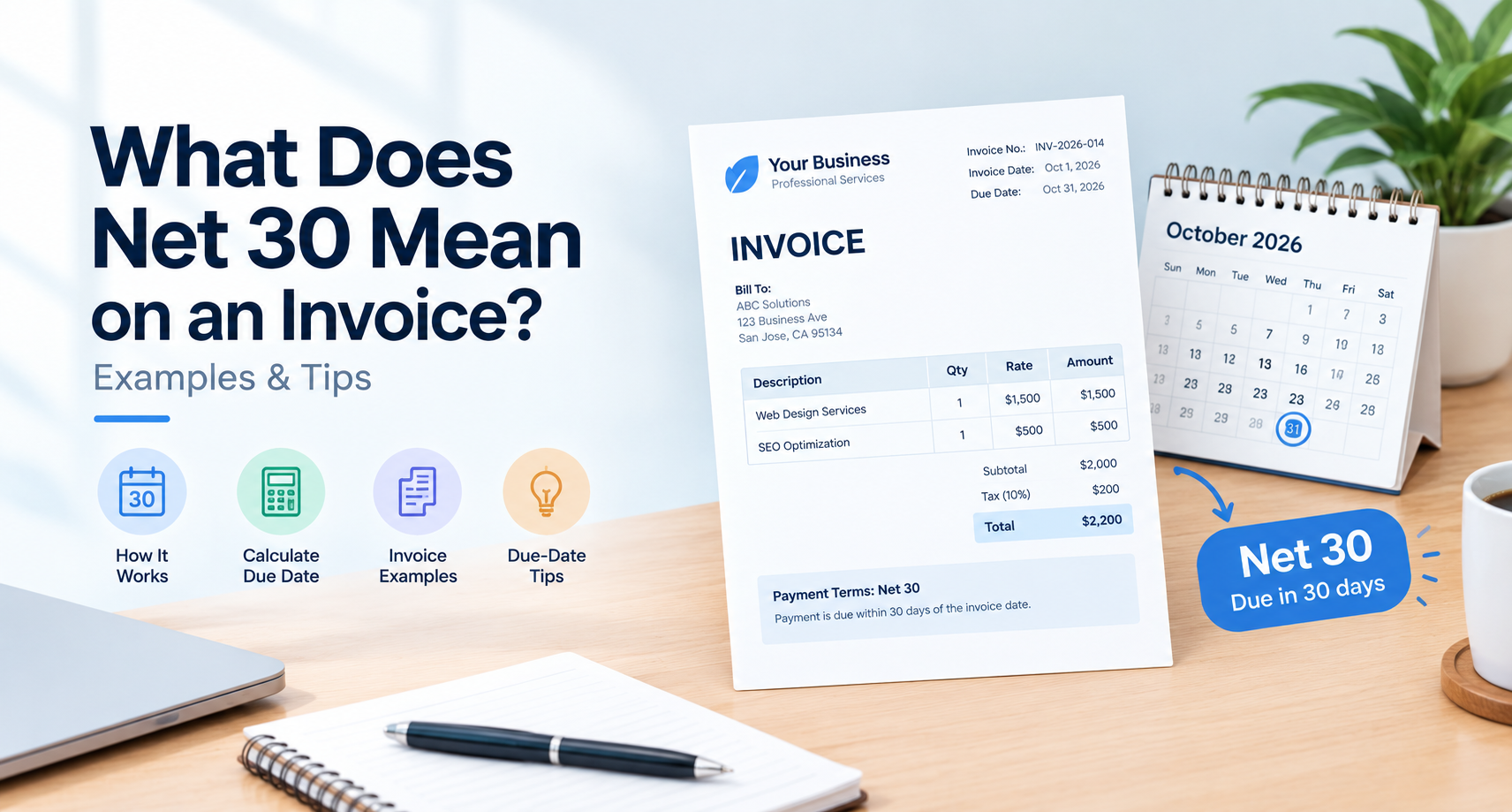
If your terms were Net 30, for example, make sure 30 days have actually passed.
It is also worth checking whether the customer received the invoice. Sometimes an unpaid invoice is simply sitting in an inbox, waiting for someone in accounts payable to process it.
Your invoice should contain the information the customer needs to approve and pay it. If you are unsure what belongs on an invoice, see this guide to what an invoice should include.
You can also review your invoice payment terms before setting your follow-up schedule.
When should you send an invoice payment reminder?
There is no single reminder schedule that works for every business.
Your agreed payment terms should come first. Your relationship with the customer also matters.
A simple follow-up schedule could look like this:
- Before the due date: Send a friendly reminder if your business normally does this.
- On the due date: A short reminder can confirm that payment is due.
- A few days overdue: Send a polite follow-up with the invoice details.
- One to two weeks overdue: Make the request more direct and ask when payment will be made.
- Seriously overdue: Send a firmer message that clearly states the outstanding balance and expected next step.
The key is consistency.
You do not want to ignore an invoice for three weeks and then send an angry message. Regular, professional reminders make the process feel like normal business administration.
They also give the customer several chances to resolve a simple problem before the situation becomes uncomfortable.
What should you include in an unpaid invoice reminder?
A useful unpaid invoice reminder does not need to be long.
The customer should be able to understand the situation within a few seconds.
Include these details:
- Invoice number so the customer can identify the document.
- Amount due so there is no confusion about the balance.
- Original due date so both sides know which payment you are discussing.
- Current status such as "now overdue."
- Clear next step such as asking the customer to make payment or confirm the expected payment date.
You can attach the invoice again if that makes payment easier.
If you need to create or update the document first, you can use this guide on how to create an invoice.
Keep the message focused. The customer should not have to read a long explanation before finding out what you need.
Start with a friendly payment reminder email
Your first reminder should usually assume that the delay may be accidental.
The customer may have missed the email. The invoice may be waiting for approval. Someone in accounts payable may simply have overlooked it.
A friendly message gives the customer an easy opportunity to fix the problem without feeling accused.
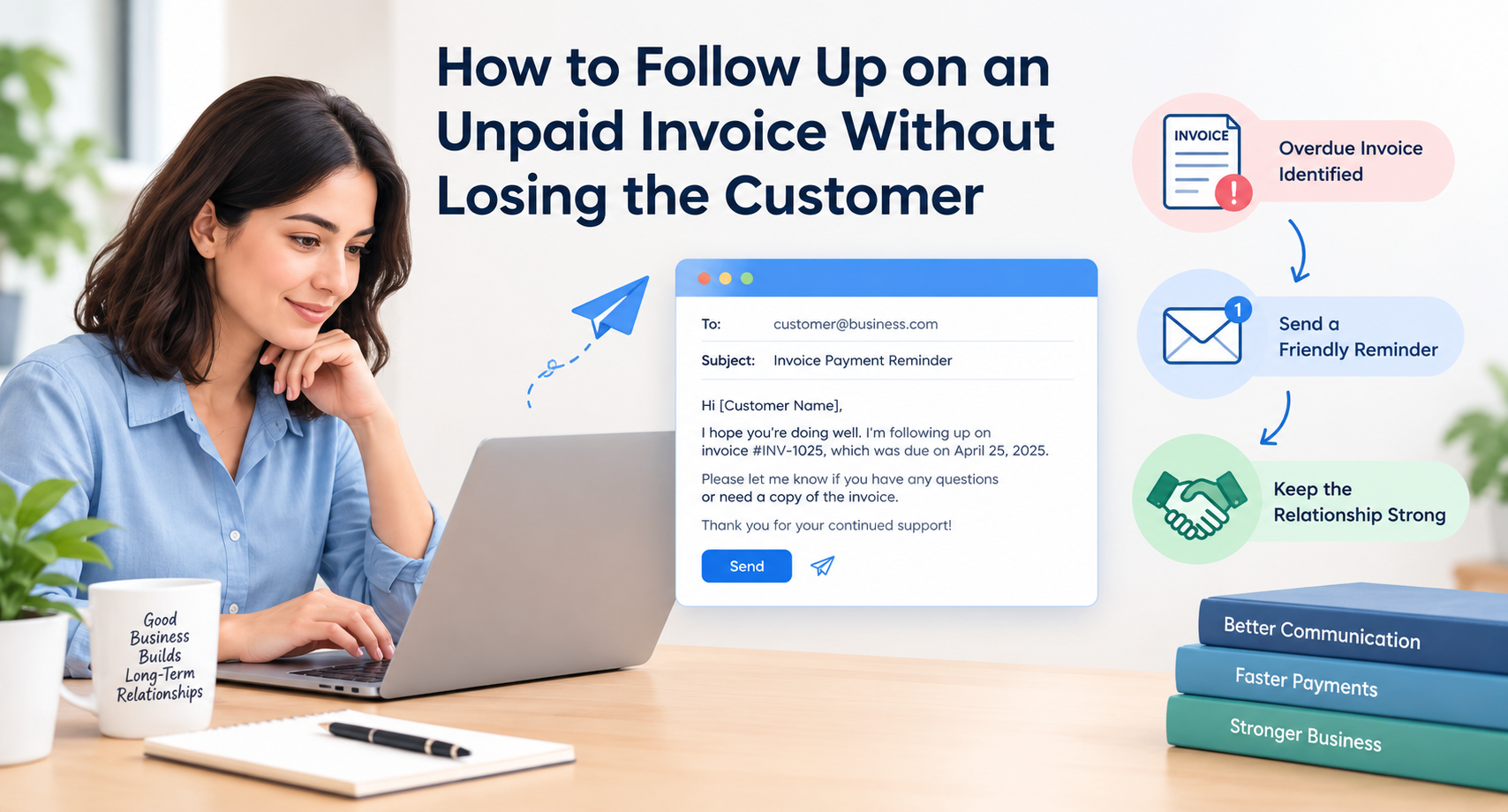
Invoice payment reminder template
Subject: Friendly reminder for Invoice #[Invoice Number]
Hi [Client Name],
Just a quick reminder that Invoice #[Invoice Number] for [Amount] was due on [Date].
I’ve attached the invoice again for convenience. Please let me know if payment has already been scheduled or if you need anything from me to process it.
Thank you,
[Your Name]
This works well as a first payment reminder email because it is short and factual.
There is no accusation. There is also no vague request such as "Please pay as soon as possible."
The customer knows exactly which invoice you mean and what you need from them.
Make the follow-up more direct when the invoice is overdue
If the first reminder receives no response, you can be more direct.
You do not need to become rude. Simply remove some of the softer language and clearly state that the invoice remains unpaid.
Overdue invoice email template
Subject: Follow-up on overdue Invoice #[Invoice Number]
Hi [Client Name],
I’m following up on Invoice #[Invoice Number] for [Amount], which was due on [Date].
The invoice is still showing as unpaid on our records. Could you please confirm when we can expect payment?
I’ve attached the invoice again for reference. If there is anything holding up the payment, please let me know and I’ll be happy to help resolve it.
Thank you,
[Your Name]
This approach works because it gives the customer two straightforward ways to respond.
They can confirm when payment will be made, or they can explain what is preventing payment.
That second option matters. A payment delay sometimes has nothing to do with the customer's willingness to pay.
Ask what is holding up the payment
A customer might have a genuine reason for not paying.
Perhaps the purchase order number is missing. Maybe the billing information needs to be corrected. The invoice could be waiting for internal approval.
Instead of assuming the worst, ask a practical question.
For example:
"Is there anything you need from us to help get this invoice processed?"
That single question can reveal a problem you can actually solve.
You can also ask:
"Could you please let me know if there is anything currently holding up payment?"
This is especially useful with long-term customers.
A reminder should not turn a small administrative issue into a relationship problem. Give the customer a chance to explain what happened before assuming that the delay is intentional.
Use a firmer reminder when an invoice is seriously overdue
If several reminders have gone unanswered, the message should become more direct.
At this stage, avoid adding emotion. Stick to the facts.
State the invoice number, outstanding amount, original due date, and the action you are requesting.
Firm invoice payment reminder template
Subject: Payment required for overdue Invoice #[Invoice Number]
Hi [Client Name],
I’m following up again regarding Invoice #[Invoice Number] for [Amount], originally due on [Date].
The balance remains outstanding, and we would appreciate payment by [Requested Date].
If payment has already been made, please send the payment details so we can update our records. If there is an issue with the invoice, please let me know so we can address it.
Thank you,
[Your Name]
Notice the difference between being firm and being aggressive.
A firm message clearly states the situation and requested action. An aggressive message attacks the customer or makes threats.
If your agreement includes late fees or collection procedures, follow the terms you actually agreed to. Do not add unexpected charges or make legal threats simply because an invoice is late.
What not to say in a payment reminder
A payment reminder can become counterproductive when frustration takes over.
Avoid messages such as:
- "Why haven't you paid me yet?"
- "You always pay late."
- "I have been waiting forever."
- "Pay this immediately or else."
- "You clearly don't respect our business."
These statements focus on blame rather than the unpaid invoice.
They can also make a customer defensive.
Do not send several reminders within a few hours just because you have not received a response. Give the customer reasonable time to see and act on the message.
Your records should also stay consistent. Keep track of when each reminder was sent and what the customer said.
How to follow up without damaging the customer relationship
Payment follow-up works better when you separate the payment issue from the personal relationship.
The invoice is overdue. That is the fact you need to address.
You do not need to decide why the customer has not paid before asking.
Keep your messages factual. Mention the invoice. State the amount. Give the due date. Ask for a clear next step.
If the customer says there is a problem, focus on solving it.
If they say payment will be made on Friday, record that date and follow up only if necessary.
This approach creates a consistent process instead of making every late payment feel like a personal conflict.
It also makes the experience easier for customers who genuinely intended to pay but missed the original deadline.
Keep a simple record of unpaid invoices
A basic payment tracking system can prevent many follow-up problems.
For each invoice, keep track of:
- Invoice number
- Customer name
- Invoice amount
- Issue date
- Due date
- Date each reminder was sent
- Customer's response
- Payment status
Consistent invoice numbers also make conversations easier to manage. If you need a better system, see this guide to invoice numbering.
Good records help you avoid sending duplicate reminders or forgetting which customers need another follow-up.
They also give you a clear history if an invoice becomes seriously overdue.
Frequently asked questions about invoice payment reminders
How do you politely remind a customer to pay an invoice?
Keep the message short and factual. Mention the invoice number, amount, due date, and payment request. For the first reminder, assume the delay may simply be an oversight.
How long should you wait before sending an unpaid invoice reminder?
Use the payment terms you agreed with the customer as your starting point. You can also send a friendly reminder before or around the due date if that fits your normal process.
What should I write in an overdue invoice email?
State that the invoice is still unpaid, include the invoice number and amount, mention the original due date, and ask when payment can be expected.
How many times should I follow up on an unpaid invoice?
There is no universal number. A better approach is to use a consistent sequence that becomes more direct as the invoice remains unpaid.
Should I attach the invoice again?
Yes, when it makes the payment process easier. Reattaching the PDF saves the customer from searching through previous emails.
If you need help with the initial invoice email, you can also review this guide on how to send an invoice by email.
Should I charge a late fee?
That depends on your agreement with the customer and the applicable rules. If a late fee was not part of the agreed terms, do not simply add one after the payment becomes overdue.
Be clear about the payment without making it personal
Following up on an unpaid invoice does not have to damage a customer relationship.
Start with a friendly reminder. If there is no response, follow up with clearer language. If the invoice remains unpaid, become more direct while keeping the message professional.
The basic process is simple:
Check the invoice → send a reminder → ask about problems → follow up → escalate when appropriate.
A consistent process takes the emotion out of payment collection. It also gives customers a clear path to resolve the issue.
The goal is simple: get paid while keeping the conversation professional.
Ready to send your next invoice?
Free, no sign-up, print-ready PDF in under a minute.