Invoice
Invoice Payment Terms Explained: Net 15, Net 30, Due on Receipt & More
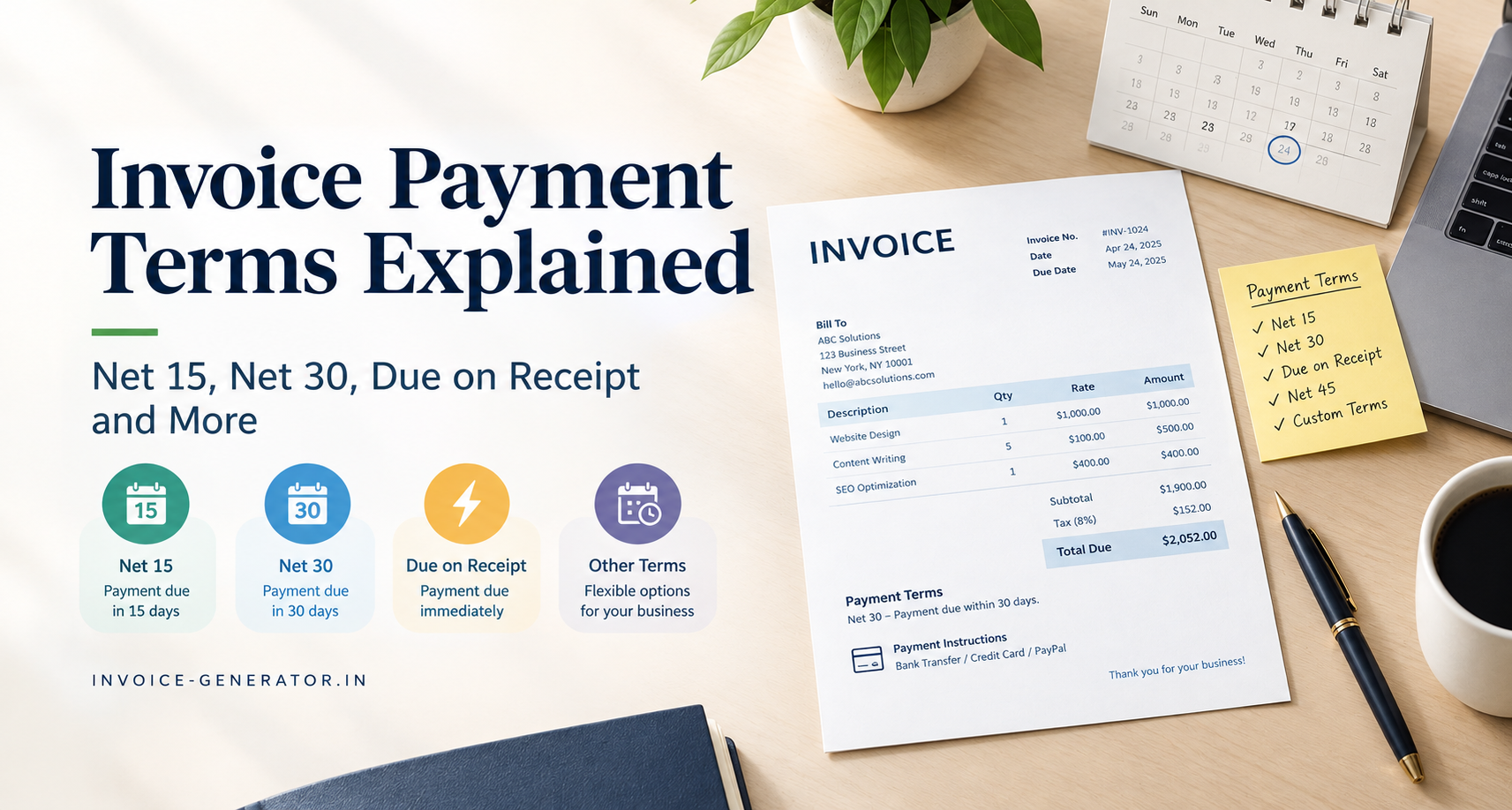
A customer opens your invoice and sees “Net 30.” Another sees “Due on Receipt.” A third receives an invoice that says “50% upfront, balance on completion.”
These are different invoice payment terms. Each tells the customer when payment is expected and, in some cases, how payments are divided across a project.
Choosing the right terms can help you manage cash flow, set clear expectations, and reduce payment delays. The wrong wording can leave customers confused about deadlines or create disagreements when an invoice becomes overdue.
In this guide, you will learn what common invoice payment terms mean, how to calculate invoice due dates, which terms may work best for freelancers and contractors, and how to write payment terms you can use on your next invoice.
What Are Invoice Payment Terms?
Invoice payment terms explain when a customer must pay an invoice and any conditions attached to that payment.
Depending on your agreement, they may include:
-
The payment deadline
-
Accepted payment methods
-
Deposit or advance-payment requirements
-
Milestone payment schedules
-
Early-payment discounts
-
Late-payment fees or interest, where agreed and legally permitted
For example:
Payment Terms: Net 15. Payment is due within 15 days of the invoice date.
Or:
Payment Terms: A 40% deposit is due before work begins. The remaining balance is due when the project is completed.
The purpose is to make the payment expectation clear before the customer receives the invoice.
If you are new to invoicing, our guide on what an invoice is, its types, and how invoicing works explains the basics.
What Are the Most Common Invoice Payment Terms?
Businesses use different payment terms depending on their cash-flow needs, customer relationships, industry, and project size.
Here is a quick comparison of five common options.
| Payment term | What it means | Example use |
|---|---|---|
| Due on Receipt | Payment is expected when the invoice is received | Small jobs or one-time services |
| Net 7 | Payment is due within 7 days of the invoice date | Short projects and smaller invoices |
| Net 15 | Payment is due within 15 days of the invoice date | Freelancers and service providers |
| Net 30 | Payment is due within 30 days of the invoice date | Business-to-business transactions |
| Net 60 | Payment is due within 60 days of the invoice date | Some larger clients and longer payment cycles |
These terms are not interchangeable. The difference is the amount of time the customer has to pay.
The examples above describe common conventions. Your written agreement and any applicable laws or industry-specific requirements take priority.
What Does Due on Receipt Mean?
Due on Receipt means payment is expected when the customer receives the invoice.
For example:
Payment is due upon receipt of this invoice.
This term may work for a small one-time service, a short job, or a transaction where immediate payment has been agreed.
However, the phrase can leave room for confusion when an invoice is delivered electronically. If you need a more specific deadline, state it clearly:
Payment is due upon receipt. Please complete payment within 3 business days.
Only use the additional deadline if it matches your agreement with the customer.
What Does Net 7 Mean?
Net 7 generally means the full outstanding invoice amount is due within seven days of the invoice date.
For example, an invoice dated October 11, 2026, would generally be due October 18, 2026, under Net 7 terms.
This can suit businesses that prefer a short payment cycle, provided their customers agree to it.
What Does Net 15 Mean?
Net 15 generally means payment is due within 15 days of the invoice date.
For example:
Invoice Date: October 11, 2026
Payment Terms: Net 15
Due Date: October 26, 2026
Net 15 can be useful for freelancers, consultants, and service providers who want to avoid unnecessarily long payment cycles.
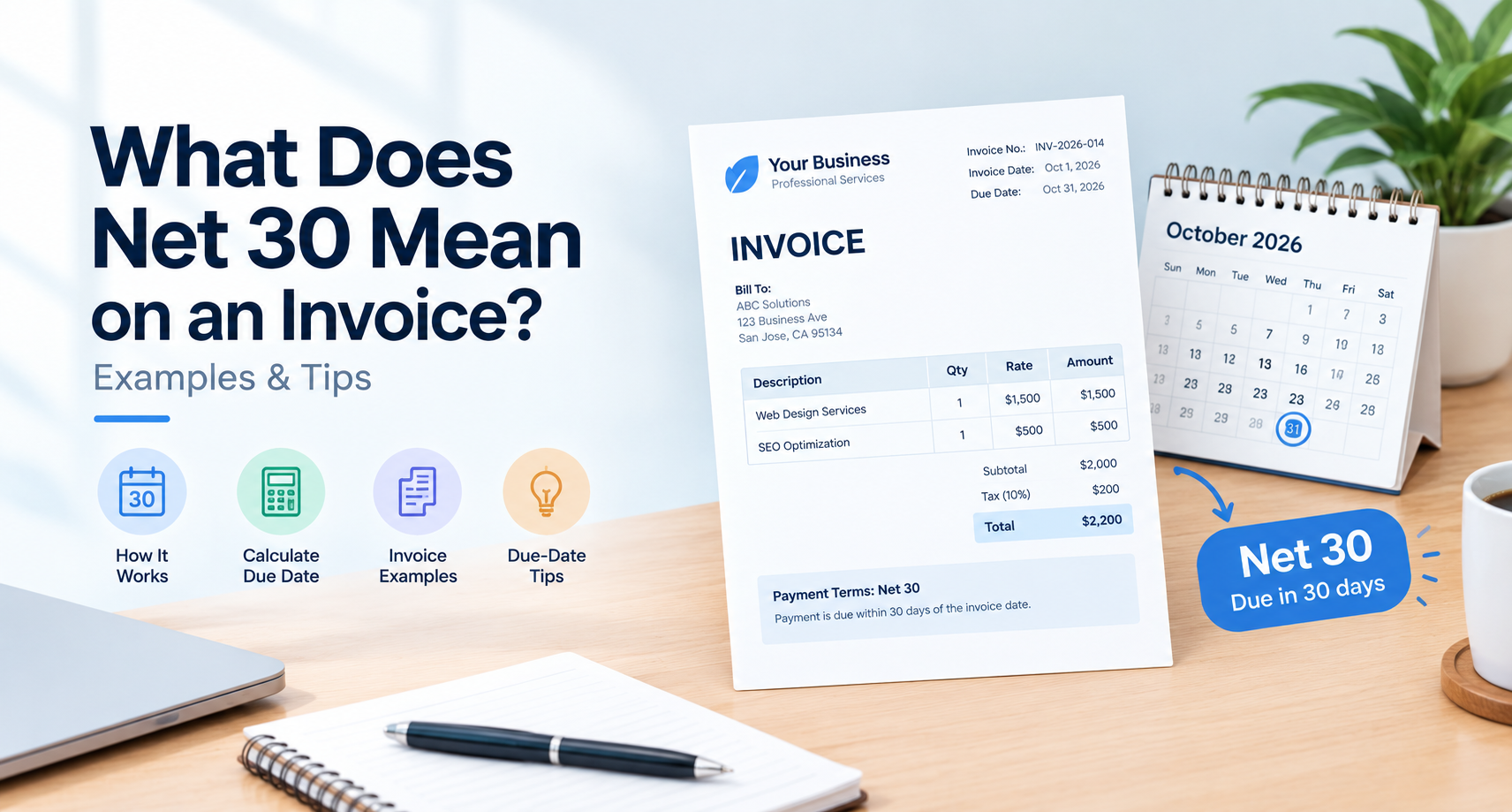
What Does Net 30 Mean?
Net 30 generally means the full outstanding invoice amount is due within 30 days of the invoice date.
For example:
Invoice Date: October 11, 2026
Payment Terms: Net 30
Due Date: November 10, 2026
Net 30 is commonly used in business-to-business transactions, although not every customer or industry follows the same convention.
It gives the customer more time to process payment than Net 15, but your business must be comfortable waiting for that money.
What Does Net 60 Mean?
Net 60 generally means the full invoice amount is due within 60 days of the invoice date.
For example:
Invoice Date: October 11, 2026
Payment Terms: Net 60
Due Date: December 10, 2026
Net 60 may be appropriate for some established business relationships or larger clients with longer payment cycles.
Before agreeing to these terms, consider whether your business can cover its operating expenses while waiting for payment.
How to Calculate an Invoice Due Date
To calculate an invoice due date, start with the invoice date and apply the payment period agreed with your customer.
For standard Net terms, the period commonly counts calendar days unless the agreement specifies business days or another calculation method.
Use this basic formula:
Due date = Invoice date + Agreed payment period
For example, suppose you issue an invoice on October 11, 2026.
| Payment terms | Invoice date | Illustrative due date |
|---|---|---|
| Net 7 | October 11, 2026 | October 18, 2026 |
| Net 15 | October 11, 2026 | October 26, 2026 |
| Net 30 | October 11, 2026 | November 10, 2026 |
| Net 60 | October 11, 2026 | December 10, 2026 |
These examples count the stated number of calendar days after the invoice date.
Important: Contract wording and applicable rules can affect how a deadline is calculated, including whether the invoice date is counted, whether business days apply, and what happens when a due date falls on a weekend or public holiday. Confirm the agreed calculation method rather than assuming every contract follows the same convention.
Why Should You Show the Actual Due Date?
Writing only “Net 30” requires the customer to calculate the deadline. Showing the date makes the expectation easier to understand.
Instead of:
Payment Terms: Net 30
Write:
Payment Terms: Net 30. Payment due November 10, 2026.
This also helps you maintain a clear payment record and identify overdue invoices.
For a practical system for recording invoice dates, due dates, payment status, and outstanding balances, read How to Track Invoices and Payments.
Net 15 vs. Net 30 vs. Net 60: Which Is Better?
The best payment term depends on how quickly your business needs to receive money and how much time your customers need to process payments.
| Factor | Net 15 | Net 30 | Net 60 |
|---|---|---|---|
| Payment window | 15 days | 30 days | 60 days |
| Cash-flow impact | Money is generally due sooner | Moderate waiting period | Longer waiting period |
| Customer flexibility | Less time to pay | More time than Net 15 | Most time among these options |
| Potential fit | Freelancers and smaller service jobs | Many routine B2B invoices | Some larger clients and negotiated contracts |
Net 15 may be a sensible choice if you need to receive payment sooner and your customers accept shorter terms.
Net 30 can work when your customers have standard business payment processes and you can accommodate the wait.
Net 60 requires more careful cash-flow planning because your business may need to fund expenses for a longer period before receiving payment.
Do not choose a longer payment period simply because a customer requests it. Review the project costs, your operating expenses, and the terms you can reasonably support.
What Payment Terms Should You Put on an Invoice?
The right wording should match the agreement you made with the customer before the work began.
Here are ready-to-use examples for different business types.
Payment Terms for Freelancers
Freelancers often bill for hourly work, fixed-price projects, or recurring services.
Option 1: Net 15
Payment Terms: Net 15. Payment is due within 15 days of the invoice date. Please use the payment method specified on this invoice.
Option 2: Payment on completion
Payment is due upon completion of the agreed work, in accordance with our project agreement.
Option 3: Deposit and final payment
A 30% deposit is due before work begins. The remaining 70% is due upon delivery of the completed project.
These examples work only when the stated terms match what you and your customer have agreed.
Payment Terms for Consultants
Consultants may bill for individual sessions, completed deliverables, or ongoing engagements.
Option 1: Net 15
Payment is due within 15 days of the invoice date. Please include the invoice number with your payment.
Option 2: Net 30
Payment Terms: Net 30. The full outstanding balance is due within 30 days of the invoice date.
Option 3: Monthly consulting services
Payment is due within 15 days of the invoice date for the consulting services provided during the stated billing period.
For recurring consulting work, make sure the invoice clearly identifies the service period and any applicable contract reference.
Payment Terms for Contractors
Contractors may need to purchase materials, schedule labor, or manage several project stages before receiving the final payment.
Option 1: Deposit before work begins
A 40% deposit is due before work begins. The remaining balance will be invoiced according to the agreed project schedule.
Option 2: Milestone billing
Payments are due according to the milestones outlined in the signed project agreement. Each invoice will identify the completed milestone and the amount payable.
Option 3: Final payment
The remaining balance is due upon completion of the agreed work, subject to the payment terms in the project agreement.
Deposits, progress payments, and final payments should be consistent with the contract and applicable rules. For construction and other regulated industries, check any specific restrictions on deposits or progress billing.
Deposits and Milestone Billing: When Should You Use Them?
Not every project should be billed with one invoice payable at the end.
For larger jobs, deposits and milestone billing can help divide the payment obligation into stages.
What Is a Deposit?
A deposit is an amount paid in advance under an agreed arrangement.
For example, a designer agrees to complete a project for $2,000 and requires a 40% deposit before starting.
-
Total project price: $2,000
-
Deposit: $800
-
Remaining balance: $1,200
The agreement should explain when the deposit is due, what it covers, and how the remaining amount will be billed.
Avoid assuming that every deposit is automatically refundable or non-refundable. Those conditions depend on the agreement and applicable rules.
What Is Milestone Billing?
Milestone billing divides a project's payments into stages linked to specific deliverables or progress points.
For example, a $10,000 project could use this schedule:
| Milestone | Percentage | Payment amount |
|---|---|---|
| Project kickoff | 30% | $3,000 |
| First major milestone | 40% | $4,000 |
| Project completion | 30% | $3,000 |
| Total | 100% | $10,000 |
The customer should know what triggers each payment and when each invoice will be issued.
This approach can help contractors, agencies, consultants, and other businesses that incur costs throughout a project.
For more guidance on preparing the document itself, see How to Create an Invoice: A Complete Guide for Small Businesses.
Early-Payment Discounts: What Does 2/10 Net 30 Mean?
Some businesses offer a discount to encourage customers to pay earlier.
A common example is 2/10 Net 30.
This generally means the customer can take a 2% discount if payment is made within 10 days. Otherwise, the full amount is due within 30 days.
Suppose an invoice is $5,000.
-
Invoice total: $5,000
-
Early-payment discount: 2%, or $100
-
Amount payable within the discount period: $4,900
-
Amount payable after the discount window: $5,000, subject to the agreed terms
Example wording:
Payment Terms: A 2% discount is available if payment is received within 10 days of the invoice date. Otherwise, the full balance is due within 30 days.
Before offering a discount, calculate whether receiving payment sooner is worth reducing the amount collected. Make the conditions clear in the agreement and invoice.
What Should You Write About Late Payments?
Late-payment wording should be clear, professional, and consistent with the agreement.
For example:
Payment is due by November 10, 2026. Please contact us before the due date if you anticipate a delay or need clarification about the invoice.
If your contract includes a late-payment fee or interest provision, describe it accurately and ensure it is permitted by applicable rules. Do not add a new fee unexpectedly after payment becomes overdue.
A simple late-payment clause might say:
Any applicable late-payment charges will be handled in accordance with the payment terms agreed between the parties and applicable law.
This wording is deliberately general. If you intend to charge a specific rate or fee, state the actual agreed terms and verify that they are enforceable for your transaction.
What Should You Do When an Invoice Becomes Overdue?
Start by checking the invoice number, original due date, payment terms, and payment status. Confirm that the payment has not already arrived, then contact the customer with a short, factual reminder.
For example:
Subject: Follow-up on Invoice INV-2026-014
Hi [Client Name],
I am following up on Invoice INV-2026-014 for [Amount], which was due on [Date].
Could you please confirm when we can expect payment? I have attached the invoice again for convenience.
Please let me know if anything is needed to help process the payment.
Thank you,
[Your Name]
For more examples and a step-by-step follow-up process, read How to Follow Up on an Unpaid Invoice Without Losing the Customer.
You can also read How to Handle Late Payments: A Small Business Guide to Getting Paid on Time for prevention strategies and next steps.
How Do Payment Terms Fit Into Your Invoicing Process?
Payment terms are one part of a complete invoicing workflow.
A simple process looks like this:
-
Agree on the price and payment conditions before work begins.
-
Complete the work or reach the agreed billing milestone.
-
Create an invoice with accurate details.
-
Include the agreed payment terms and actual due date.
-
Send the invoice to the correct billing contact.
-
Record the invoice in your tracking system.
-
Monitor the due date and record payments.
-
Follow up if payment becomes overdue.
Use a consistent invoice number to make each payment request easy to identify. Our guide on How to Number Invoices: Simple Invoice Numbering Systems and Best Practices explains how to create a consistent numbering system.
It also helps to maintain an organized filing system. Read How to Organize Invoices: A Simple Filing System for Small Business for ways to store invoices and find records when needed.
If you need to send an invoice by email, see How to Send an Invoice by Email With a Professional Email Template.
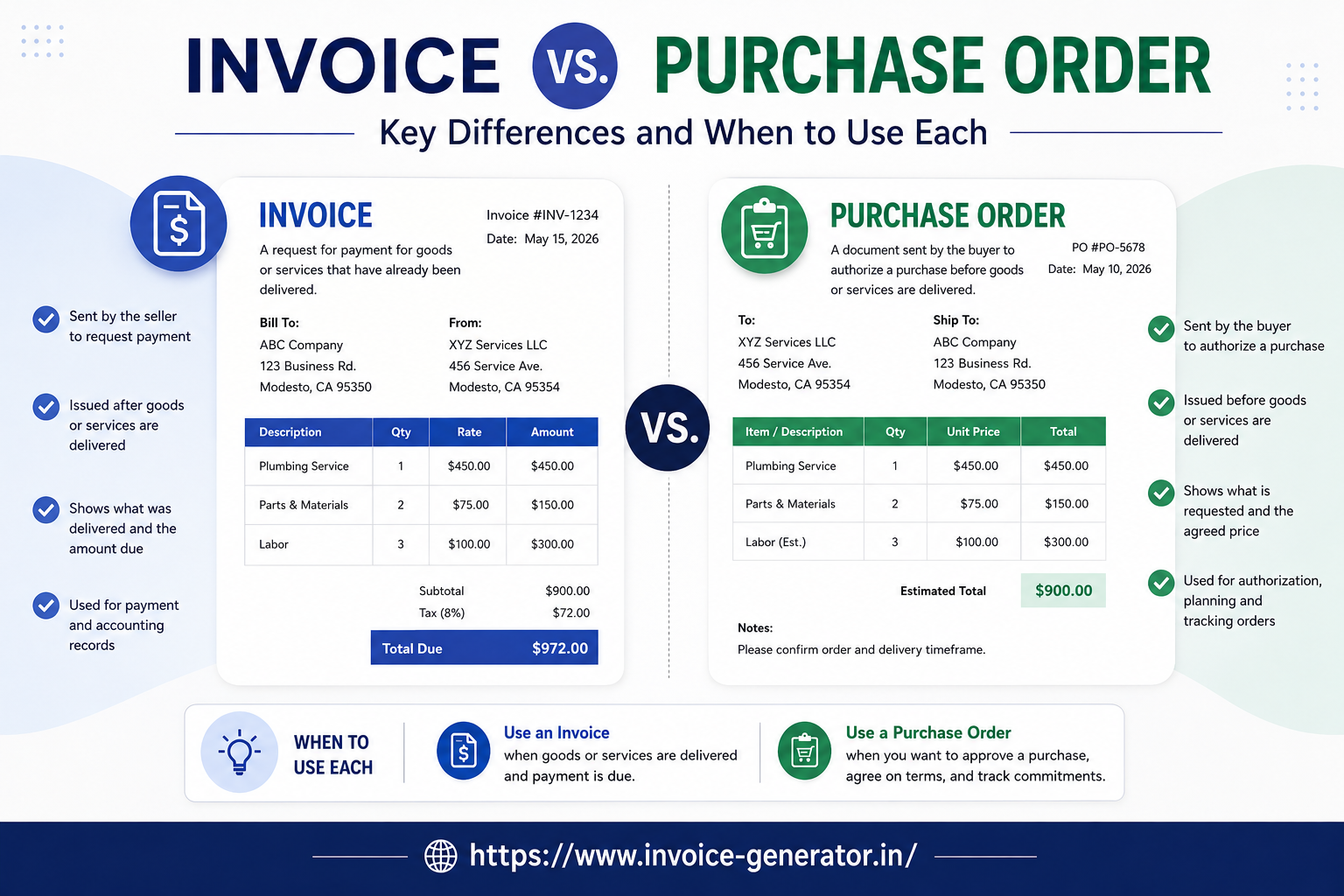
And if you need to confirm whether a payment has been received, our guide to Invoice vs. Receipt: What's the Difference and When Should You Use Each explains the difference between a payment request and payment confirmation.
How to Create an Invoice With Clear Payment Terms
Once you have agreed on the payment terms, include them on the invoice alongside the invoice date, due date, item descriptions, and total amount due.
You can use the free online invoice generator to prepare a professional invoice without signing up.
If you prefer a step-by-step walkthrough, read How to Make an Invoice Online for Free.
Before sending your invoice, check that:
-
The payment terms match your agreement.
-
The invoice date and due date are correct.
-
The total amount and any applicable taxes are accurate.
-
Any deposit or previous payment is accounted for correctly.
-
The payment instructions are clear.
-
The customer has the information needed to identify and pay the invoice.
For a more detailed checklist, see What Should an Invoice Include? 10 Essential Elements of a Professional Invoice.
Frequently Asked Questions About Invoice Payment Terms
What are invoice payment terms?
Invoice payment terms specify when a customer should pay an invoice and any applicable conditions, such as payment methods, deposits, discounts, or agreed late-payment charges.
What does Net 30 mean on an invoice?
Net 30 generally means the outstanding invoice balance is due within 30 days of the invoice date. The exact deadline should be calculated according to the agreement and applicable rules.
What is the difference between Net 15 and Net 30?
Net 15 generally gives the customer 15 days to pay, while Net 30 gives them 30 days. Net 15 can shorten the payment cycle, while Net 30 provides more time for the customer to process payment.
What does Due on Receipt mean?
Due on Receipt means payment is expected when the invoice is received. If a specific deadline is intended, state it explicitly in the agreed terms.
Do Net payment terms include weekends?
They commonly count calendar days unless the contract specifies business days or another method. Check the wording of your agreement and applicable rules before calculating the due date.
Which payment terms are best for freelancers?
Net 15, payment on completion, or an agreed deposit may work for freelancers. The right choice depends on the project, cash-flow needs, and customer agreement.
Which payment terms are best for contractors?
Contractors may benefit from deposits and milestone payments when they need to fund materials, labor, or several stages of work. Any payment schedule should be documented in the project agreement and comply with applicable requirements.
Can I charge a late-payment fee?
That depends on the agreement and the rules that apply to your transaction. Make the fee and its calculation clear in advance, and verify that it is permitted before charging it.
Should I put the actual due date on an invoice?
Yes. Showing the actual calendar date alongside the payment terms reduces confusion and gives both parties a clear deadline to reference.
Can I use different payment terms for different customers?
Yes, if the terms are agreed with each customer and comply with applicable requirements. Keep the proposal, contract, and invoice consistent.
Choose Payment Terms Your Business Can Manage
The best invoice payment terms are the ones your customer understands and your business can reasonably support.
Net 7 or Net 15 may suit some short projects and service businesses. Net 30 may fit established business relationships. Net 60 can work for certain larger clients, but it requires careful cash-flow planning. Deposits and milestone payments can help spread the cost of longer projects.
Whatever terms you choose, agree on them before work begins, state them clearly on the invoice, and include the actual due date whenever possible.
When you are ready to prepare your next invoice, use the free invoice generator to create your invoice online without signing up.
Ready to send your next invoice?
Free, no sign-up, print-ready PDF in under a minute.